


SCUBA - Self-contained ‘underwater’ breathing apparatus[This set is used to breathe under water]
Oxygen Deficient Atmospheres - OSHA
1. Self Contained Breathing Apparatus Parts

Main Components of SCBA Set

A. Air Cylinder (SCBA)
The Air Cylinder is the main component of a Self-Contained Breathing Apparatus (SCBA) that stores compressed breathable air for the user. It supplies clean air during operations where the surrounding atmosphere is unsafe or oxygen deficient.

Construction Material
SCBA cylinders are manufactured using high-strength materials to safely store high-pressure air:
- Steel cylinders – Strong and durable but heavier
- Aluminum cylinders – Lighter than steel with good corrosion resistance
- Carbon composite cylinders – Very lightweight and commonly used in modern industrial SCBA sets
Hydro testing of cylinders
- Steel 5 Year
- Aluminium 5 year
- Carbon fiber composite material 3 Years
Typical Specifications in Industrial Plants
In chemical, pharmaceutical, and petrochemical industries, SCBA cylinders generally have the following specifications:
- Pressure Rating: 200 – 300 bar
- Capacity: 6 – 9 liters
- Air Quality: Clean, dry, breathable compressed air
Function in SCBA System
The cylinder is mounted on the back plate assembly of the SCBA set and acts as the primary air supply source for the user.
It provides breathable air during the emergency.
The stored high-pressure air flows from the cylinder through the pressure reducer and regulator, supplying controlled breathable air to the face mask.

[ads id="ads1"]
B. Cylinder Valve and Pressure Gauge
The Cylinder Valve controls the release of compressed air from the SCBA cylinder. It allows the user to open or close the air supply when operating or storing the SCBA set.
Cylinder Valve Function
- Regulates the flow of compressed air from the cylinder.
- Allows the user to start or stop the air supply.
- Designed to handle high-pressure air (200–300 bar) safely.
- Prevents air leakage when the SCBA is not in use.
Pressure Gauge
A pressure gauge is connected to the SCBA system to show the remaining air pressure inside the cylinder.
Importance in Industrial Safety
The pressure gauge helps workers:
- Monitor available breathing air
- Plan safe exit from hazardous areas
- Avoid running out of air during emergency operations
This system is critical during gas leak response, confined space entry, firefighting, and emergency rescue operations where continuous monitoring of air supply is essential.

[ads id="ads1"]
C. Pressure Reducer / Regulator (First Stage Regulator)
The Pressure Reducer (First Stage Regulator) is an important component of the SCBA system that reduces the very high pressure of air stored in the cylinder to a safe intermediate pressure.
Air inside the SCBA cylinder is typically stored at 200–300 bar, which cannot be inhaled directly. The pressure reducer lowers this pressure to a controlled level before supplying it to the breathing system.
Main Functions
1. Pressure Reduction
Reduces high cylinder pressure to a safe intermediate pressure suitable for breathing equipment.
2. Stable Air Supply
Maintains a consistent air flow to the breathing system even when cylinder pressure decreases.
3. Safe Operation of Demand Valve
Provides the correct pressure required for the demand valve (second stage regulator) to function properly.
4. Controlled Breathing Air Flow
Ensures that air is delivered smoothly and safely during inhalation.
Importance in Industrial Safety
The pressure reducer is a critical safety component in SCBA sets used in chemical, pharmaceutical, and petrochemical industries, especially during:
- Toxic gas leak response
- Confined space entry
- Firefighting operations
- Emergency rescue activities
Reliable pressure regulation ensures workers receive continuous, safe breathing air in hazardous environments.

D. Demand Valve (Lung Demand Valve – LDV)
The Demand Valve, also known as the Lung Demand Valve (LDV), is a key component of the SCBA system that supplies breathing air only when the user inhales.

Working Function
1. Air Supply During Inhalation
When the user inhales, the demand valve automatically opens and releases air into the face mask.
2. Automatic Shut-Off
When the user stops inhaling, the valve closes automatically, stopping the airflow.
Importance in SCBA System
- Supplies air only when required
- Reduces unnecessary air consumption
- Extends cylinder working duration
- Ensures efficient breathing support
Industrial Safety Use
In chemical, pharmaceutical, and petrochemical plants, the demand valve is essential during:
- Emergency rescue operations
- Gas leak response
- Confined space entry
- Firefighting activities
This controlled air delivery mechanism helps workers use the available breathing air efficiently in hazardous environments.

E. Full Face Mask (SCBA)
The Full Face Mask forms an airtight seal around the user’s face, covering the eyes, nose, and mouth. This design ensures that contaminated air from the surrounding environment cannot enter the breathing zone.

Key Features
Clear Visor for Visibility
Provides a wide and clear field of vision during rescue operations, inspection work, and emergency response.
Rubber or Silicone Sealing Edge
A flexible rubber or silicone seal fits tightly around the face to prevent air leakage and maintain a secure seal.
Demand Valve Connection Port
The mask includes a connection port for the demand valve (LDV), which supplies breathable air directly into the mask during inhalation.
Importance in Industrial Safety
In chemical, pharmaceutical, and petrochemical plants, the full face mask protects workers from:
- Toxic gases
- Chemical vapors
- Smoke and harmful airborne contaminants
This protection is critical during gas leak emergencies, confined space entry, and firefighting operations, ensuring workers can breathe safely in hazardous environments.

F. Harness and Back Plate Assembly
The Harness and Back Plate Assembly supports the entire SCBA system on the user’s back. It is designed to secure the cylinder and other components while distributing the weight evenly, allowing comfortable and stable use during operations.

Main Functions
1. Cylinder and Component Support
The back plate securely holds the air cylinder, pressure reducer, and associated components in position.
2. Adjustable Straps for Proper Fit
The harness includes adjustable shoulder straps and waist belts, allowing users to tighten the SCBA set for a secure and comfortable fit.
3. Weight Distribution
The design distributes the weight of the cylinder evenly across the shoulders and back, reducing fatigue during long operations.
4. Mobility and Stability
Provides good balance and stability, enabling workers to move safely and efficiently in hazardous environments.
Importance in Industrial Operations
In chemical, pharmaceutical, and petrochemical plants, the harness and back plate assembly helps workers carry the breathing apparatus safely during emergencies.
This ergonomic design ensures better mobility, comfort, and operational safety in hazardous areas

Importance in Industrial Operations
In chemical, pharmaceutical, and petrochemical plants, the harness and back plate assembly helps workers carry the breathing apparatus safely during emergencies.
This ergonomic design ensures better mobility, comfort, and operational safety in hazardous areas.
G. High Pressure and Low Pressure Hoses

High Pressure Hose – Carries compressed air from the SCBA cylinder to the pressure reducer/regulator and is designed to withstand very high pressure (about 200–300 bar).
-
Low Pressure Hose – Carries regulated air from the pressure reducer to the demand valve (LDV) at a safe intermediate pressure suitable for breathing.
-
Air Flow Connection – These hoses connect major SCBA components and ensure smooth and continuous air flow through the breathing system.
-
Safety Design – Hoses are made of strong, flexible, and pressure-resistant materials to prevent leakage or damage during operation.
-
Importance in SCBA System – Proper functioning of these hoses ensures reliable air delivery to the face mask, allowing safe breathing in hazardous environments.
H. Warning Whistle / Low Pressure Alarm

The Warning Whistle, also known as the Low Pressure Alarm, is a safety device in the SCBA system that alerts the user when the air pressure in the cylinder drops to a critical level.
Typically, the alarm activates when the cylinder pressure falls to around 50–60 bar, indicating that only a small amount of breathing air remains.
Functions
1. Audible Warning
The device produces a loud whistle sound that can be clearly heard even in noisy industrial environments.
2. Low Air Indication
It informs the user that the remaining air supply is limited and the cylinder is nearly empty.
3. Emergency Exit Signal
The alarm signals the user to immediately leave the hazardous area and move to a safe location before the air supply is exhausted.
Importance in Industrial Safety
In chemical, pharmaceutical, and petrochemical plants, the warning whistle is a critical safety feature during emergencies
This system ensures workers receive a timely warning to safely exit hazardous environments before the air supply runs out.

I. Bypass Valve (Emergency Supply)
The bypass valve in a Self-Contained Breathing Apparatus (SCBA) provides manual emergency air supply to the face mask when the demand valve fails or does not operate properly.
Key Purpose
1. Manual Air Supply
The bypass valve allows the user to manually release compressed air into the face mask by turning or opening the valve.
2. Emergency Breathing Support
It ensures the user continues receiving breathing air if the demand valve malfunctions or stops supplying air.
3. Used Only in Emergency
The bypass valve releases air continuously, which can consume the cylinder air quickly, so it should be used only during emergency situations.
4. Backup Safety Mechanism
In chemical, pharmaceutical, and petrochemical industries, the bypass valve acts as a backup safety feature that maintains breathing air supply until the worker safely exits the hazardous or toxic environment.
2. SCBA Air Flow Explanation
-
Air Storage – Clean compressed air is stored in the air cylinder at 200–300 bar pressure.
-
Cylinder Valve Opening – When the cylinder valve is opened, compressed air starts flowing from the cylinder into the SCBA system.
-
High Pressure Line – Air travels through the high pressure hose from the cylinder to the pressure reducer (first stage regulator).
-
Pressure Reduction – The pressure reducer lowers the high cylinder pressure to a safe intermediate pressure suitable for breathing equipment.
- SCBA Set containing High pressure cylinder with inhalation connection with back plate accessories.
`Pressure regulation:
It has two pressure regulation systems in- 1st Regulator it gives reduced pressure in range 4 – 8 atmospheric pressure.
- Second stage regulation is a demand valve which gives output pressure just above atmospheric pressure which gives air when person breathing or continuous positive pressure.
-
Air Monitoring – The pressure gauge continuously shows the remaining air pressure inside the cylinder.
-
Low Pressure Supply – Regulated air flows through the low pressure hose toward the demand valve (LDV).
-
Breathing Control – When the user inhales, the demand valve automatically releases air into the full face mask.
-
User Inhalation – The worker breathes clean air inside the mask, which prevents entry of toxic gases or vapors.
-
Exhalation – After breathing out, the exhaled air leaves the mask through the exhalation valve to the atmosphere.
-
Low Pressure Warning – When cylinder pressure drops to about 50–60 bar, the warning whistle or low pressure alarm activates to alert the user.
-
Emergency Air Supply – If the demand valve fails, the bypass valve can manually supply air to the mask until the user exits the hazardous area.
 [ads id="ads1"]
3. Types of SCBA
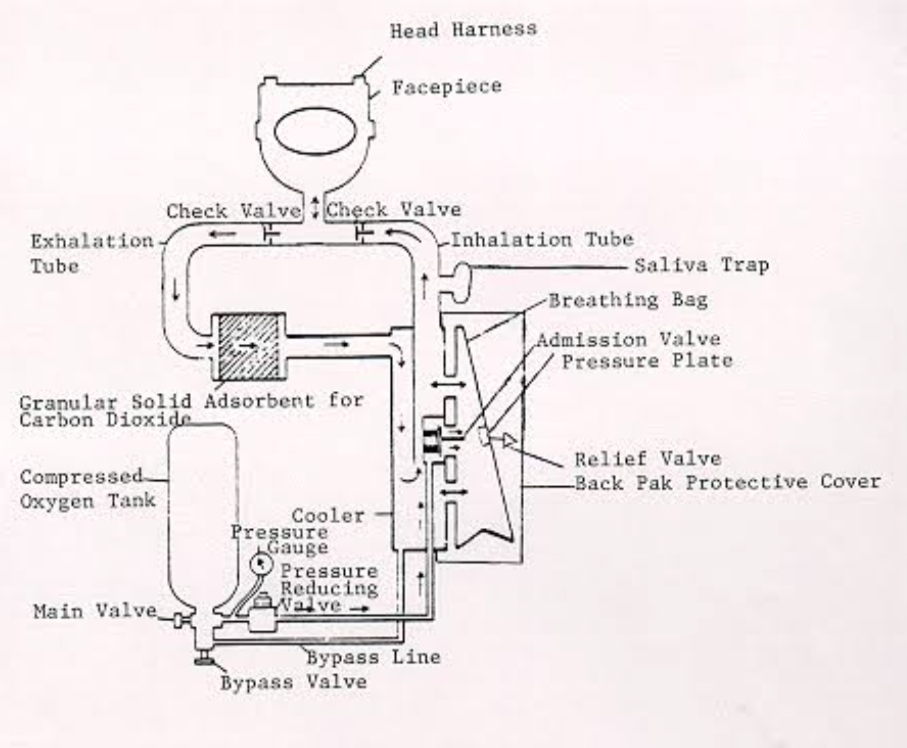

4. SCBA Service time


5. SCBA Operational Guidelines
1. Entry Procedure in Hazardous Area
- Enter hazardous areas only after wearing and checking SCBA properly.
- Confirm sufficient cylinder pressure to complete the task safely.
- Identify the work area, entry point, and exit route before entering.
- Inform the control room or supervisor before starting the operation.
- Use SCBA while entering areas with toxic gases, oxygen deficiency, chemical leaks, or confined spaces common in chemical, pharmaceutical, and petrochemical plants.
2. Air Monitoring During Operation
- Continuously monitor the cylinder pressure gauge during work.
- Track the remaining air supply to avoid sudden depletion.
- Pay attention to the low-pressure warning alarm, which indicates limited air time.
- Avoid unnecessary physical exertion to reduce air consumption.
- Plan to exit the hazardous area when air pressure reaches the safety limit.
3. Communication and Team Movement
- Always work in pairs or teams (buddy system) during SCBA operations.
- Maintain visual or voice communication with team members.
- Move carefully and stay within the designated safe path.
- Inform the team immediately if there is equipment malfunction, breathing difficulty, or visibility problem.
- Follow instructions from safety personnel or emergency response leaders.
4. Emergency Exit Procedure
- Immediately leave the hazardous area if low-pressure alarm activates or equipment fails.
- Follow the nearest safe exit route without panic.
- Inform the team and supervisor about the emergency situation.
- Maintain controlled breathing while exiting to conserve remaining air supply.
- After exiting, report the condition of the SCBA equipment and hazardous environment to safety personnel.
6. Procedure for Donning SCBA (Self Contained Breathing Apparatus)
1. Preparation Before Wearing
- Inspect the SCBA set before entering hazardous areas in chemical, pharmaceutical, and petrochemical plants.
- Check cylinder pressure (generally 200–300 bar depending on cylinder type).
- Ensure pressure gauge, regulator, hoses, face mask, and harness are in good condition.
- Check for leakage, damage, or loose connections.
- Verify low-pressure alarm and bypass valve are functioning properly.
- Ensure the equipment is ready for use in toxic gas leaks, confined spaces, or emergency rescue operations.
2. Wearing the Harness Assembly
- Lift the SCBA cylinder and wear the harness like a backpack.
- Place the cylinder firmly on the back.
- Tighten shoulder straps and waist belt for proper support.
- Ensure the cylinder remains stable and balanced during movement.
- Proper adjustment helps during walking, climbing ladders, or rescue work in industrial plants.
3. Opening Cylinder Valve
- Slowly open the cylinder valve by turning it anti-clockwise.
- Ensure the valve is fully opened.
- Check the pressure gauge to confirm adequate air supply.
- Listen for any air leakage from hoses or regulator connections.
- Confirm the air supply system is activated properly.
4. Wearing and Adjusting Face Mask
- Place the full face mask over nose and mouth.
- Pull the head straps evenly to tighten the mask.
- Ensure a tight seal around the face.
- Remove any obstructions like facial hair or loose hair that may break the seal.
- Proper sealing prevents entry of toxic gases, vapors, and hazardous fumes.
5. Checking Air Supply and Positive Pressure
- Take few normal breaths to confirm smooth airflow.
- Ensure the demand valve supplies air properly.
- Confirm positive pressure inside the mask to prevent contaminated air entry.
- Check that the low-pressure warning alarm works correctly.
- After confirming proper operation, the user can safely enter hazardous or oxygen-deficient areas in industrial facilities.
7. Self contained breathing apparatus specifications
1. NFPA USA - National Fire Protection Agency[ads id="ads1"]
2. NIOSH - National Institute for Occupational safety & Health
3. Europe 89/686/EEC4. European Standards EN 137: 20065. ANSI - American National Standard Institute6. MSA – Measurement safety analysis
7. WAC – Washington Administrative Code
General Specification
8. Cylinder carrying Practice
9. Check points of breathing apparatus
Monthly checkpoints
Cylinder Pressure Check
- Verify cylinder pressure using the pressure gauge.
- Ensure pressure is within the recommended operating range (generally 200–300 bar depending on cylinder type).
- Refill the cylinder if pressure is below the required level.
-
Cylinder Condition
- Inspect the cylinder body for dents, corrosion, cracks, or damage.
- Check the hydrostatic test date to ensure the cylinder is within the valid testing period.
- Confirm the cylinder valve operates smoothly.
-
Regulator and Demand Valve
- Inspect the pressure regulator and demand valve for proper functioning.
- Ensure air flows smoothly during breathing simulation.
- Check for leaks or abnormal sounds.
-
Pressure Gauge Accuracy
- Compare the cylinder pressure gauge reading with the regulator gauge if available.
- Ensure the gauge shows correct and stable readings.
-
Low Pressure Alarm
- Test the low-pressure warning alarm to confirm it activates at the specified pressure level.
- Ensure the alarm sound is clear and audible.
-
Face Mask Inspection
- Check the mask lens for scratches or cracks.
- Inspect the face seal for deformation or damage.
- Ensure head straps and buckles are in good condition.
-
Hoses and Connections
- Inspect air hoses, connectors, and fittings for leakage, cracks, or loose connections.
- Ensure all connections are tight and secure.
-
Harness and Straps
- Check the shoulder straps, waist belt, and buckles for wear or damage.
- Ensure straps can be tightened and adjusted properly.
-
Bypass Valve Function
- Operate the bypass valve to ensure it allows emergency air supply when required.
- Confirm it closes properly after testing.
-
General Condition
- Ensure the SCBA set is clean, dry, and free from chemical contamination.
- Confirm the equipment is stored properly and ready for emergency use in chemical, pharmaceutical, and petrochemical plant operations.

After use Inspection
SCBA After Use Restoration Check Points
-
Cylinder Pressure
- Check the remaining cylinder pressure after use.
- Refill the cylinder if pressure is below the required operating level.
- Ensure the cylinder valve is properly closed after checking.
-
Face Mask Cleaning
- Clean the face mask using mild detergent or approved disinfectant.
- Remove sweat, dust, chemical vapors, or contaminants.
- Rinse with clean water and allow the mask to dry completely.
-
Inspection for Damage
- Inspect the mask lens, face seal, and straps for cracks, deformation, or wear.
- Check the regulator, hoses, and connectors for leakage or damage.
- Replace or repair any defective components immediately.
-
Air System Check
- Test the regulator and demand valve to confirm proper airflow.
- Check that the low-pressure warning alarm functions correctly.
- Ensure the bypass valve operates smoothly.
-
Harness and Straps
- Inspect the shoulder straps, waist belt, and buckles for looseness or wear.
- Adjust and secure the harness for the next emergency use.
-
Cleaning of SCBA Set
- Wipe the cylinder, harness assembly, and components with a clean cloth.
- Remove any chemical residue, dust, or oil contamination.
- Proper Storage
- Store the SCBA set in a clean, dry, and designated emergency location.
- Ensure the equipment is ready for immediate use during gas leaks, fire incidents, or confined space rescue operations in chemical, pharmaceutical, and petrochemical plants.

Cleaning and sanitizing procedure
Initial Inspection
- Inspect the SCBA set for chemical contamination, dust, oil, or dirt after use.
- Identify components that require cleaning or disinfection, especially the face mask.
-
Face Mask Cleaning
- Remove the face mask from the SCBA system if detachable.
- Wash the mask with warm water and mild detergent or approved disinfectant.
- Gently clean the lens, face seal, and exhalation valve area.
-
Disinfection Process
- Use an approved sanitizing solution to disinfect the face mask.
- This helps remove bacteria, sweat contamination, and chemical residues common in industrial environments.
-
Rinsing
- Rinse the mask and cleaned parts with clean potable water to remove detergent or disinfectant residues.
- Ensure no chemical or soap residue remains on the mask surface.
-
Drying
- Allow components to air dry in a clean and ventilated area.
- Avoid direct sunlight or excessive heat to prevent material damage.
-
Cleaning of Harness and Cylinder
- Wipe the harness, cylinder, regulator, and hoses using a clean damp cloth.
- Remove dust, oil, or chemical contamination from equipment surfaces.
-
Final Inspection
- After cleaning, inspect all parts for damage, cracks, or loose fittings.
- Ensure the mask seal, straps, and valves are in proper condition.
-
Sanitary Storage
- Store the SCBA set in a clean, dry, and designated storage area.
- Ensure the equipment remains ready for emergency use in chemical, pharmaceutical, and petrochemical facilities.

Storage Requirements of SCBA Set
- Store SCBA sets in a clean, dry, and well-ventilated area inside the plant safety equipment room.
- Keep the equipment away from direct sunlight, high temperature, chemicals, and corrosive vapors.
- Place SCBA sets in designated racks or cabinets for quick access during emergencies.
- Ensure the cylinder is properly secured and partially pressurized to avoid contamination inside the cylinder.
- Protect the face mask, regulator, and hoses from dust, moisture, and physical damage.
- Do not place heavy objects on SCBA equipment to prevent damage to valves, gauges, or connections.
- Keep the SCBA storage area clearly marked and easily accessible for emergency response teams.
- Conduct regular inspection of stored SCBA units to ensure they remain ready for use during gas leaks, fire incidents, or confined space rescue operations in chemical, pharmaceutical, and petrochemical plants.
11. Frequently Asked Interview Questions
1. What is SCBA?
Self-Contained Breathing Apparatus (SCBA) is a portable respiratory protection device that supplies clean compressed breathable air from a high-pressure cylinder carried by the user.
- Provides independent breathing air in hazardous environments where normal air cannot be inhaled safely.
- High-pressure air stored in the cylinder (generally 200–300 bar) is reduced to safe breathing pressure using regulators.
- Air is supplied to the user through a demand valve and full face mask during inhalation.
- Exhaled air is released to the atmosphere, preventing re-breathing of contaminated air.
SCBA is mainly used in chemical, petrochemical, and pharmaceutical industries during gas leaks, confined space entry, firefighting, rescue operations, and work in oxygen-deficient environments.
2. What is the full form of SCBA?
SCBA stands for Self-Contained Breathing Apparatus.
- Self-Contained means the breathing air supply is carried by the user in a cylinder.
- It does not depend on the surrounding environment for breathing air.
- The cylinder contains compressed breathable air stored at high pressure.
This equipment is essential in industries where workers may encounter toxic gases, chemical vapors, smoke, or oxygen-deficient atmospheres.
3. Why is SCBA used in industries?
SCBA is used to protect workers when the surrounding atmosphere is unsafe for breathing.
- Provides clean breathing air in toxic gas environments.
- Protects workers in oxygen-deficient atmospheres.
- Prevents inhalation of chemical vapors, smoke, and hazardous gases.
- Ensures safe breathing during emergency response operations.
In chemical and petrochemical plants, SCBA is commonly used during gas leaks, confined space entry, firefighting, rescue operations, and maintenance in hazardous areas.
4. What is the difference between SCBA and respirator?
SCBA and respirators are both respiratory protection devices but operate differently.
- SCBA supplies clean air from a cylinder carried by the user.
- Respirator filters contaminants from the surrounding air using cartridges or filters.
- SCBA can be used in oxygen-deficient environments, while respirators cannot.
- SCBA provides complete respiratory protection in highly toxic atmospheres.
Respirators are generally used in environments where oxygen level is normal and contaminants can be filtered safely.
5. What is the difference between SCBA and SCUBA?
SCBA and SCUBA are both self-contained breathing systems but used in different environments.
- SCBA – Self-Contained Breathing Apparatus used in hazardous industrial atmospheres.
- SCUBA – Self-Contained Underwater Breathing Apparatus used for underwater diving.
- SCBA is used in industries, firefighting, and rescue operations.
- SCUBA is used by divers for underwater breathing.
The main difference is the operating environment — industrial atmosphere vs underwater environment.
6. Where is SCBA used in industrial plants?
SCBA is used wherever the surrounding air is unsafe or oxygen-deficient.
- Toxic gas leak response.
- Confined space entry (tanks, vessels, reactors).
- Firefighting operations.
- Emergency rescue activities.
- Maintenance work in hazardous process areas.
Industries such as chemical plants, petrochemical refineries, and pharmaceutical manufacturing units rely on SCBA for emergency safety operations.
7. What type of air is used in SCBA cylinders?
SCBA cylinders contain clean, dry, compressed breathable air that meets breathing air quality standards.
- Air must be free from oil vapor, moisture, and toxic contaminants.
- Air is compressed and stored at 200–300 bar pressure.
- Breathing air quality must comply with industrial safety standards.
SCBA cylinders are usually filled using high-pressure compressors or cascade storage systems in industrial plants.
8. What are the main components of an SCBA set?
An SCBA system consists of several components that work together to provide safe breathing air.
- Air cylinder.
- Cylinder valve and pressure gauge.
- Pressure reducer or first stage regulator.
- Demand valve (lung demand valve).
- Full face mask.
- Harness and back plate assembly.
- High pressure and low pressure hoses.
- Low pressure warning whistle.
- Bypass valve.
Each component plays a critical role in storing, regulating, and supplying breathing air safely.
9. What is the function of the air cylinder in SCBA?
The air cylinder is the primary air storage component of the SCBA system.
- Stores compressed breathable air at high pressure (200–300 bar).
- Supplies air to the regulator and breathing system.
- Provides breathing air during hazardous operations.
The cylinder is mounted on the back plate assembly and acts as the main air source for the user during emergency operations.
10. What is the working pressure of an SCBA cylinder?
The working pressure of an SCBA cylinder is typically 200 bar or 300 bar depending on the cylinder design.
- Higher pressure cylinders store more breathable air in the same cylinder size.
- Typical cylinder capacities are 6 L, 6.8 L, or 9 L.
- Higher pressure increases the service duration of the SCBA set.
SCBA service time can be estimated using the formula:
SCBA Duration (minutes) = (Cylinder Pressure in bar × Cylinder Volume in liters) ÷ Air Consumption Rate in liters per minute
Average breathing air consumption = 40 liters per minute.
11. What is the function of the pressure reducer in SCBA?
The pressure reducer (first stage regulator) reduces the very high pressure of air stored in the SCBA cylinder to a safe intermediate pressure suitable for the breathing system.
- Reduces cylinder pressure from about 200–300 bar to intermediate pressure (around 6–10 bar).
- Maintains stable air pressure even when cylinder pressure decreases during use.
- Supplies controlled air to the demand valve for proper breathing.
- Prevents direct exposure of high-pressure air to the face mask system.
This component ensures smooth and safe air delivery to the user during hazardous industrial operations.
12. What is the function of the demand valve (LDV)?
The demand valve, also called the Lung Demand Valve (LDV), supplies breathing air only when the user inhales.
- Opens automatically when the user inhales and supplies air into the face mask.
- Closes automatically when inhalation stops.
- Prevents unnecessary air consumption.
- Helps extend the working duration of the SCBA cylinder.
This controlled air delivery system ensures efficient use of compressed air in hazardous environments.
13. What is the function of the bypass valve in SCBA?
The bypass valve provides manual emergency air supply to the face mask when the demand valve fails or does not function properly.
- Allows the user to manually release compressed air into the face mask.
- Maintains breathing air supply during demand valve malfunction.
- Used only during emergency situations.
The bypass valve releases air continuously, so it consumes cylinder air quickly and is mainly used until the worker safely exits the hazardous area.
14. What is the function of the low-pressure alarm in SCBA?
The low-pressure alarm, also called the warning whistle, alerts the user when the air pressure in the cylinder reaches a critical level.
- Produces a loud audible alarm.
- Warns the user that the air supply is running low.
- Signals the worker to immediately leave the hazardous area.
This safety feature ensures that the user exits the dangerous environment before the breathing air supply is exhausted.
15. At what pressure does the SCBA low-pressure alarm activate?
The SCBA low-pressure alarm typically activates when the cylinder pressure drops to around 50–60 bar.
- Indicates that only a limited amount of breathing air remains.
- Alerts the user to stop work and exit the hazardous area immediately.
- Provides enough remaining air for safe evacuation.
This early warning system is critical for preventing air depletion during emergency operations.
16. What is the purpose of the full face mask in SCBA?
The full face mask forms an airtight seal around the user’s face and supplies breathable air from the SCBA system.
- Covers the eyes, nose, and mouth completely.
- Prevents entry of toxic gases, vapors, or smoke.
- Provides a clear visor for visibility during operations.
- Connects to the demand valve to deliver breathing air.
The airtight seal ensures that contaminated air from the surrounding environment cannot enter the breathing zone.
17. What is the function of the pressure gauge in SCBA?
The pressure gauge indicates the remaining air pressure inside the SCBA cylinder.
- Helps the user monitor available breathing air.
- Allows workers to plan safe exit time from hazardous areas.
- Prevents unexpected air depletion during operations.
Continuous monitoring of cylinder pressure is essential during gas leak response, confined space work, and rescue operations.
18. What is the difference between high-pressure and low-pressure hoses in SCBA?
High-pressure and low-pressure hoses transport air through the SCBA system at different pressure levels.
- High-pressure hose carries compressed air from the cylinder to the pressure reducer.
- Low-pressure hose carries regulated air from the pressure reducer to the demand valve.
- High-pressure hose handles very high pressure (200–300 bar).
- Low-pressure hose carries intermediate pressure air suitable for breathing equipment.
Both hoses ensure proper and controlled airflow throughout the SCBA system.
19. Explain the working principle of an SCBA set.
SCBA works by supplying clean compressed air from a cylinder and regulating it to a safe breathing pressure before delivering it to the user.
- Compressed air is stored in the cylinder at 200–300 bar.
- The pressure reducer lowers this high pressure to intermediate pressure.
- Air flows to the demand valve through the low-pressure hose.
- When the user inhales, the demand valve supplies air into the face mask.
The user breathes clean air inside the mask, and the exhaled air is released outside through the exhalation valve.
20. Explain the airflow path in an SCBA system.
The airflow in SCBA follows a controlled sequence to ensure safe breathing.
- Air is stored in the high-pressure cylinder.
- Air flows through the cylinder valve into the high-pressure hose.
- The pressure reducer lowers the cylinder pressure to intermediate pressure.
- Air moves through the low-pressure hose to the demand valve.
- When the user inhales, the demand valve supplies air to the face mask.
The user inhales clean air, and the exhaled air leaves the mask through the exhalation valve, preventing re-breathing of contaminated air.
21. How does the demand valve operate in an SCBA?
The demand valve operates automatically based on the breathing pattern of the user and supplies air only when inhalation occurs.
- When the user inhales, a slight pressure drop occurs inside the face mask.
- This pressure drop activates the demand valve mechanism.
- The valve opens and releases breathing air from the regulator into the mask.
- When inhalation stops, the valve automatically closes and stops the airflow.
This system ensures that compressed air is used efficiently and prevents unnecessary air consumption.
22. What happens if the demand valve fails in an SCBA?
If the demand valve fails or stops functioning properly, the user may not receive automatic breathing air from the SCBA system.
- The worker can use the bypass valve to manually supply air into the mask.
- The bypass valve allows continuous airflow to maintain breathing.
- The user should immediately exit the hazardous area.
- The SCBA equipment must be inspected and repaired before reuse.
The bypass valve acts as an emergency backup system to maintain breathing air until the user reaches a safe area.
23. What is the function of the exhalation valve in SCBA?
The exhalation valve allows the user to release exhaled air from the face mask to the surrounding atmosphere.
- It opens automatically when the user exhales.
- It prevents accumulation of carbon dioxide inside the mask.
- It ensures that only fresh breathing air is inhaled.
- It maintains proper airflow and breathing comfort.
This valve helps maintain a continuous and safe breathing cycle inside the SCBA mask.
24. What is positive pressure in an SCBA mask?
Positive pressure means that the pressure inside the face mask is slightly higher than the surrounding atmospheric pressure.
- The higher internal pressure prevents outside contaminated air from entering the mask.
- Even if there is a small leakage, clean air flows outward instead of toxic air entering the mask.
- It provides better respiratory protection in hazardous environments.
Modern industrial SCBA sets generally use a positive pressure system for maximum safety.
25. What is negative pressure breathing apparatus?
Negative pressure breathing apparatus is a system where the pressure inside the face mask becomes lower than the surrounding atmospheric pressure during inhalation.
- Air enters the mask when the user inhales and creates negative pressure inside the mask.
- If the mask seal is not perfect, contaminated air can enter the mask.
- This system provides lower protection compared to positive pressure systems.
Negative pressure systems were used in older equipment and are rarely used in modern industrial SCBA systems.
26. What is the donning procedure of an SCBA set?
Donning refers to the correct procedure for wearing and preparing the SCBA before entering a hazardous area.
- Inspect the SCBA set and check cylinder pressure.
- Wear the harness and secure the cylinder on the back.
- Open the cylinder valve slowly and check the pressure gauge.
- Wear the full face mask and tighten the straps properly.
- Check air supply and confirm positive pressure inside the mask.
After these checks, the worker can safely enter the hazardous environment.
27. What is the doffing procedure of an SCBA set?
Doffing refers to the safe removal of the SCBA equipment after leaving the hazardous environment.
- Move to a safe and clean atmosphere.
- Close the cylinder valve.
- Release the remaining air pressure from the system.
- Remove the face mask carefully.
- Remove the harness and SCBA set.
After removal, the equipment should be inspected, cleaned, and prepared for the next use.
28. What checks should be done before using an SCBA set?
Before using SCBA, a pre-use inspection must be performed to ensure the equipment functions properly.
- Check cylinder pressure and ensure it is within the required range.
- Inspect the regulator, hoses, and connections for leakage.
- Check the face mask seal and condition.
- Test the low-pressure warning alarm.
- Ensure the bypass valve and demand valve are functioning properly.
These checks ensure that the SCBA is safe and reliable before entering hazardous areas.
29. What are the monthly inspection checkpoints of SCBA?
Monthly inspections ensure that SCBA equipment remains operational and ready for emergency use.
- Check cylinder pressure and hydro test validity.
- Inspect the cylinder body for dents, corrosion, or damage.
- Test the regulator and demand valve operation.
- Check the pressure gauge accuracy.
- Test the low-pressure warning alarm.
Regular inspection ensures the SCBA set is ready for emergency response operations.
30. What checks are required after using an SCBA set?
After using SCBA, proper inspection and maintenance are necessary before storing the equipment.
- Check remaining cylinder pressure and refill if required.
- Clean and disinfect the face mask properly.
- Inspect hoses, regulators, and valves for damage.
- Check harness straps and fittings.
- Ensure the equipment is clean and stored in a designated safety area.
Post-use inspection ensures the SCBA set remains ready for the next emergency operation.
31. What are the storage requirements of an SCBA set?
SCBA equipment must be stored properly so that it remains ready for emergency use and protected from damage.
- Store the SCBA set in a clean, dry, and well-ventilated safety equipment room.
- Keep the equipment away from heat, sunlight, chemicals, and corrosive vapors.
- Place SCBA sets in designated racks or cabinets for quick access during emergencies.
- Protect the face mask, hoses, regulator, and pressure gauge from dust and physical damage.
Proper storage ensures the SCBA system remains reliable and ready during gas leaks, fires, or confined space rescue operations.
32. Why is the buddy system used during SCBA operation?
The buddy system means that workers using SCBA always operate in pairs or teams for safety.
- Ensures that one worker can assist the other in case of equipment failure.
- Helps monitor each other’s air pressure and physical condition.
- Provides immediate support during emergency rescue situations.
- Improves communication and safe movement in hazardous environments.
This system is widely used in chemical plants and refineries to reduce risk during confined space entry and gas leak response.
33. What action should be taken when the low-pressure alarm sounds?
When the SCBA low-pressure alarm activates, it indicates that only limited breathing air remains in the cylinder.
- Immediately stop the ongoing work.
- Inform the team members or supervisor.
- Exit the hazardous area through the nearest safe route.
- Maintain controlled breathing to conserve remaining air.
The alarm provides sufficient time for the worker to safely leave the dangerous environment before the air supply is exhausted.
34. Why should SCBA users control their breathing during operation?
Controlled breathing helps conserve the available compressed air inside the SCBA cylinder.
- Rapid or heavy breathing increases air consumption.
- High physical exertion can reduce the SCBA service time.
- Calm and steady breathing allows longer working duration.
- Proper breathing ensures sufficient air remains for safe exit.
Workers using SCBA are trained to maintain slow and steady breathing patterns during emergency operations.
35. How is SCBA service time calculated?
SCBA service time indicates how long a user can safely breathe using the compressed air stored in the cylinder.
- Service time depends on cylinder pressure and cylinder volume.
- It also depends on the breathing rate of the user.
- Higher pressure cylinders provide longer service duration.
The calculation formula is:
SCBA Service Time (minutes) = (Cylinder Pressure in bar × Cylinder Volume in liters) ÷ Air Consumption Rate in liters per minute
The average air consumption rate of a person during SCBA use is approximately 40 liters per minute.
36. What is the average air consumption rate of a person using SCBA?
The average breathing air consumption rate during SCBA use is approximately 40 liters per minute under normal working conditions.
- This value is used to estimate the service duration of the SCBA cylinder.
- The actual air consumption may increase during heavy physical work.
- Stress, panic, and high activity levels also increase breathing rate.
Therefore, safety calculations usually consider 40 liters per minute as the standard breathing rate.
37. What factors affect the duration of SCBA air supply?
The service time of an SCBA cylinder can vary depending on several operational factors.
- Cylinder pressure and cylinder volume.
- Breathing rate of the user.
- Physical workload or exertion level.
- Fitness and lung capacity of the worker.
Heavy physical activity can reduce the SCBA working duration by 25–50 percent compared to normal breathing conditions.
38. What is an oxygen-deficient atmosphere?
An oxygen-deficient atmosphere occurs when the oxygen concentration in air falls below the safe breathing level.
- Normal atmospheric oxygen concentration is approximately 20.9%.
- According to safety standards, 19.5% is the minimum safe oxygen level.
- Oxygen levels below this limit can affect human health and breathing.
Such conditions are commonly found in confined spaces, storage tanks, reactors, and areas with gas leaks, where SCBA must be used.
39. What is the minimum acceptable oxygen level according to OSHA?
According to OSHA standards, the minimum safe oxygen concentration in the atmosphere is 19.5 percent.
- Oxygen levels above 19.5% are considered safe for breathing.
- Oxygen levels below this value indicate an oxygen-deficient environment.
- Workers must use SCBA or supplied air respirators in such conditions.
Low oxygen environments can cause dizziness, breathing difficulty, unconsciousness, or even death.
40. What are the hazards of working in oxygen-deficient environments?
Oxygen deficiency can seriously affect human health and may lead to life-threatening conditions.
- Reduced oxygen causes fatigue, dizziness, and poor concentration.
- Very low oxygen levels can cause unconsciousness or mental failure.
- Severe oxygen deficiency can result in respiratory failure and death.
- Workers may collapse suddenly without warning.
Therefore, SCBA is mandatory when entering areas where oxygen levels are below 19.5 percent.
41. In which industrial situations is SCBA mandatory?
SCBA is mandatory when workers must enter environments where the surrounding atmosphere is unsafe for breathing.
- Toxic gas leak response in chemical or petrochemical plants.
- Confined space entry such as tanks, vessels, reactors, and pits.
- Firefighting and smoke-filled environments.
- Emergency rescue operations in hazardous process areas.
SCBA is also required when oxygen levels fall below 19.5% or when toxic gas concentration exceeds safe exposure limits.
42. What materials are used for SCBA cylinders?
SCBA cylinders are manufactured from high-strength materials designed to safely store compressed air at very high pressure.
- Steel cylinders, which are strong and durable but relatively heavy.
- Aluminum cylinders, which are lighter and corrosion resistant.
- Carbon fiber composite cylinders, which are very lightweight and widely used in modern SCBA sets.
Composite cylinders are preferred in industrial safety equipment because they reduce weight and improve mobility during emergency operations.
43. What is the hydrostatic testing interval for SCBA cylinders?
Hydrostatic testing is performed to verify the structural strength and safety of SCBA cylinders under high pressure.
- Steel cylinders are typically hydro tested every 5 years.
- Aluminum cylinders are also tested every 5 years.
- Carbon fiber composite cylinders are usually tested every 3 years.
This test ensures that the cylinder can safely withstand high-pressure air storage without leakage or structural failure.
44. How is an SCBA cylinder refilled?
SCBA cylinders are refilled using specialized high-pressure air filling systems that supply clean breathable air.
- Cylinders are filled using a high-pressure air compressor designed for breathing air.
- They can also be filled through a cascade storage system.
- The air must be filtered and meet breathing air quality standards.
- Cylinder pressure is filled up to the rated pressure, usually 200 bar or 300 bar.
Proper filling procedures ensure safe operation and maintain the quality of breathing air.
45. What cleaning procedure is followed for SCBA face masks?
Cleaning and sanitizing the face mask is important to remove contaminants after use.
- Wash the mask with warm water and mild detergent or approved disinfectant.
- Clean the visor, face seal, and exhalation valve area carefully.
- Rinse the mask with clean water to remove detergent residue.
- Allow the mask to air dry in a clean and ventilated area.
Regular cleaning prevents bacterial contamination and ensures hygienic use of the breathing apparatus.
46. What are common SCBA equipment failures?
SCBA equipment failures can occur due to poor maintenance, damage, or component malfunction.
- Regulator or pressure reducer malfunction.
- Demand valve failure or blockage.
- Leakage from hoses, connectors, or cylinder valve.
- Faulty pressure gauge or low-pressure alarm failure.
Regular inspection and preventive maintenance help reduce the risk of SCBA equipment failure.
47. What international standards apply to SCBA equipment?
SCBA equipment must comply with international safety standards to ensure reliability and performance in hazardous environments.
- NFPA – National Fire Protection Association (USA).
- NIOSH – National Institute for Occupational Safety and Health.
- EN 137 – European standard for respiratory protective equipment.
- ANSI – American National Standards Institute.
These standards define performance requirements, testing procedures, and safety guidelines for breathing apparatus.
48. What is NFPA standard related to SCBA?
NFPA provides safety standards for firefighting and emergency response equipment, including SCBA systems.
- The most relevant standard is NFPA 1981, which specifies performance requirements for SCBA used in emergency services.
- It covers testing for heat resistance, durability, and breathing performance.
- It ensures that SCBA equipment functions reliably in extreme conditions.
Compliance with NFPA standards improves safety and reliability during firefighting and rescue operations.
49. What is EN 137 standard?
EN 137 is a European standard that specifies requirements for open-circuit SCBA used by firefighters and emergency responders.
- Defines performance requirements for respiratory protective equipment.
- Specifies testing for durability, breathing resistance, and operational reliability.
- Ensures the SCBA system functions safely under extreme environmental conditions.
Equipment certified under EN 137 is widely used in industrial and emergency response applications.
50. What is the role of NIOSH in respiratory protection equipment?
NIOSH is responsible for testing and certifying respiratory protection equipment used in industrial and occupational environments.
- Evaluates the performance and safety of respirators and breathing apparatus.
- Certifies that equipment meets required safety standards.
- Ensures respiratory protective devices provide adequate protection to workers.
NIOSH certification helps industries select reliable respiratory protection equipment for hazardous work environments.
51. What is the PASS system in SCBA?
PASS stands for Personal Alert Safety System, which is an electronic safety device used with SCBA to monitor the movement of the wearer.
- It activates an audible alarm if the user remains motionless for a specific time.
- Alerts nearby workers or rescue teams that the user may be in danger.
- The alarm can also be manually activated during emergency situations.
- Helps locate injured or unconscious workers in hazardous environments.
This system is widely used during firefighting and rescue operations to improve worker safety.
52. What is the typical capacity of an SCBA cylinder?
SCBA cylinders are designed to store compressed breathing air and their capacity depends on the cylinder size.
- Common cylinder capacities are 6 liters, 6.8 liters, and 9 liters.
- The stored air volume increases with higher cylinder pressure.
- Most industrial SCBA cylinders operate at 200 bar or 300 bar pressure.
- Larger capacity cylinders provide longer breathing duration.
The cylinder capacity and pressure together determine the total breathing air available.
53. What is the typical working duration of an SCBA set?
The working duration of an SCBA set depends on cylinder capacity, pressure, and breathing rate of the user.
- Typical industrial SCBA sets provide 30 to 60 minutes of breathing air.
- Higher pressure cylinders provide longer service time.
- Heavy physical work increases breathing rate and reduces duration.
- Controlled breathing can extend the available air supply.
The approximate service time can be calculated using the formula:
SCBA Duration (minutes) = (Cylinder Pressure in bar × Cylinder Volume in liters) ÷ Air Consumption Rate in liters per minute
54. Why is facial hair not allowed while using SCBA?
Facial hair can interfere with the proper sealing of the SCBA face mask.
- Beard or thick facial hair can create gaps between the mask and the face.
- These gaps may allow toxic gases or contaminated air to enter the mask.
- Proper airtight sealing is essential for safe respiratory protection.
- Workers using SCBA are usually required to be clean-shaven.
A proper face seal ensures that only clean breathing air enters the mask.
55. What is the purpose of the harness and back plate assembly?
The harness and back plate assembly supports and secures the SCBA components on the user’s body.
- Holds the air cylinder firmly on the back of the user.
- Distributes the weight of the cylinder evenly across shoulders and back.
- Provides adjustable straps for proper fitting.
- Improves balance and mobility during emergency operations.
This ergonomic design allows workers to move safely while carrying the breathing apparatus.
56. Why is compressed air used instead of oxygen in SCBA?
SCBA systems use compressed air instead of pure oxygen for safety reasons.
- Pure oxygen increases the risk of fire and explosion.
- Compressed air contains approximately 21% oxygen, which is safe for breathing.
- Oxygen-rich environments can accelerate combustion of materials.
- Using compressed air reduces fire hazards in industrial environments.
Therefore, most industrial SCBA systems use clean compressed air rather than pure oxygen.
57. What precautions should be taken while carrying an SCBA cylinder?
Proper handling of the SCBA cylinder is important to prevent damage or accidents.
- Cylinders should be carried by the neck or designated handle.
- Do not lift the cylinder using the pressure gauge or regulator assembly.
- Avoid dropping or striking the cylinder against hard surfaces.
- Ensure the cylinder valve is protected during transportation.
Correct handling prevents damage to valves, regulators, and pressure gauges.
58. What is the service life of an SCBA cylinder?
The service life of an SCBA cylinder depends on its material and manufacturer specifications.
- Maximum service life is typically 20 years from the manufacturing date.
- Many industries recommend replacement after 15 years for safety reasons.
- Cylinders must undergo periodic hydrostatic testing during their service life.
- Damaged cylinders must be removed from service immediately.
Regular inspection and testing ensure the cylinder remains safe for high-pressure use.
59. Why must SCBA cylinders be hydrostatically tested?
Hydrostatic testing is performed to verify the strength and structural integrity of the cylinder.
- Ensures the cylinder can safely withstand high internal pressure.
- Detects cracks, deformation, or structural weaknesses.
- Prevents sudden cylinder rupture or leakage.
- Ensures compliance with industrial safety standards.
This test is essential for maintaining the safety and reliability of SCBA cylinders.
60. Why is SCBA considered critical emergency equipment in industries?
SCBA is critical emergency equipment because it provides life-saving respiratory protection in hazardous environments.
- Protects workers from toxic gases, chemical vapors, and smoke.
- Allows safe entry into oxygen-deficient areas.
- Supports emergency rescue and firefighting operations.
- Ensures workers can safely escape from dangerous atmospheres.
In chemical, petrochemical, and pharmaceutical industries, SCBA plays a vital role in protecting human life during emergencies.
